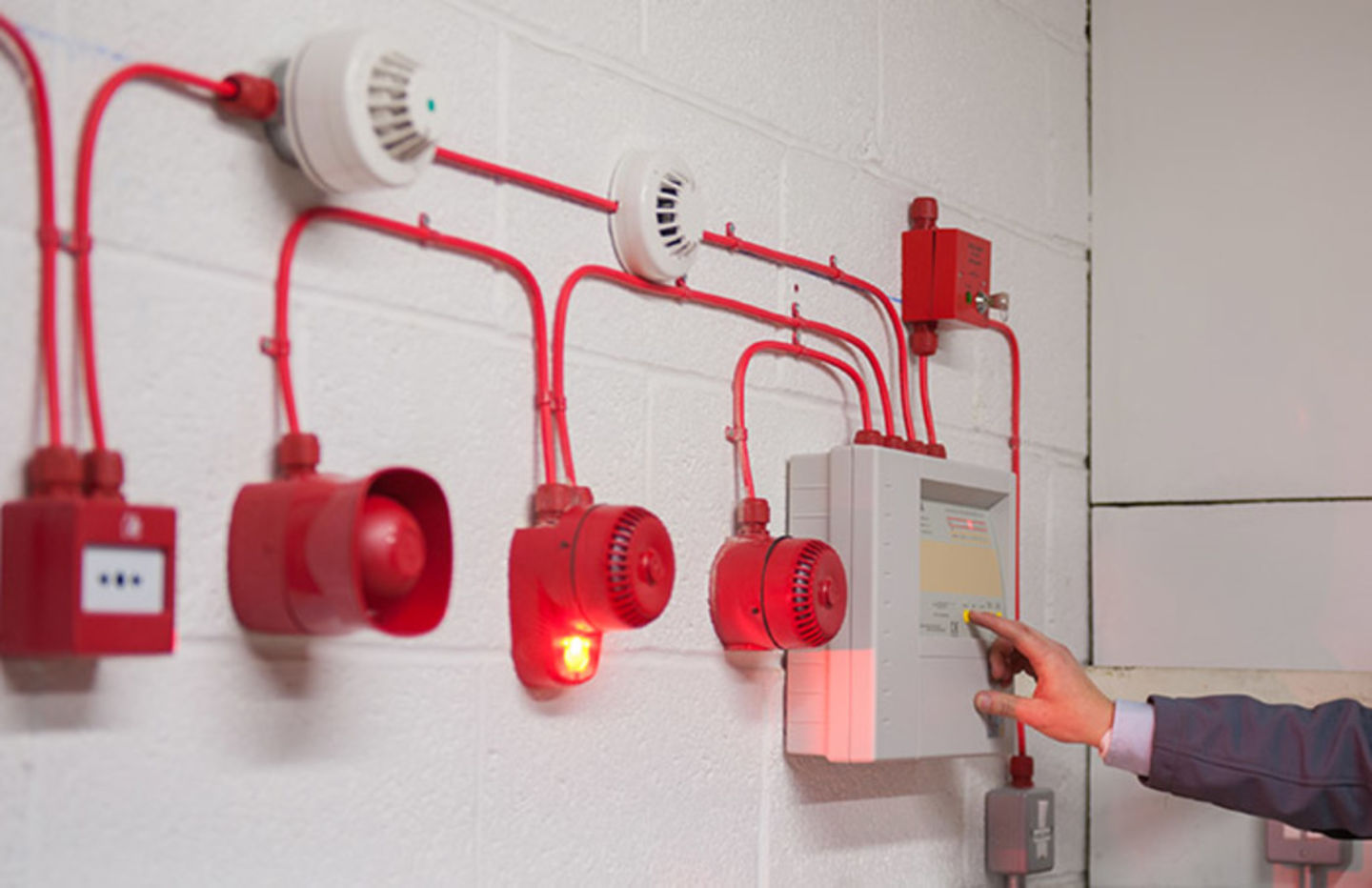
Choosing the right fire alarm system is an important part of protecting your business, employees, customers and premises.
There isn’t one fire alarm system that is suitable for every type of commercial property. The right solution depends on factors such as the size and layout of the building, how it is used, the level of risk and the people who need to be protected.
At NJR Electrical & Fire, we provide fire alarm design, installation, servicing and maintenance for commercial premises across Huddersfield, Kirkheaton and the wider West Yorkshire area.
Why Does Your Business Need a Fire Alarm System?
A fire alarm system is designed to provide an early warning of fire, allowing people within a building to take appropriate action and evacuate safely.
The type of system required will depend on the individual premises and the risks associated with it.
Businesses such as offices, warehouses, shops, apartment blocks, schools, care facilities and industrial premises can all have very different fire detection requirements.
A suitable system should take into account:
- The size and layout of the building
- The use of each area
- The number of occupants
- Sleeping or vulnerable occupants
- Potential sources of fire
- Escape routes
- Environmental conditions
- The level of fire risk
- Any existing fire safety measures
A fire risk assessment should be used to help determine the appropriate fire detection and alarm arrangements for a premises.
What Are the Main Types of Fire Alarm System?
There are several types of fire alarm system commonly used in commercial and other non-domestic premises.
The most appropriate system will depend on the specific requirements of the building.
Conventional Fire Alarm Systems
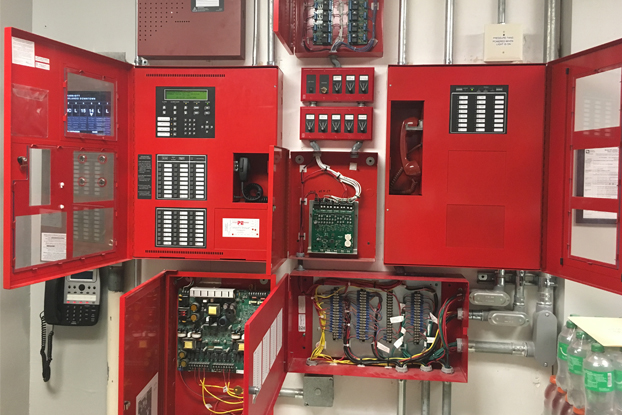
A conventional fire alarm system divides a building into different zones.
When a detector or manual call point is activated, the control panel indicates the zone in which the activation has occurred.
Conventional systems can be suitable for certain smaller or less complex premises where identifying the general area of an alarm is sufficient.
Addressable Fire Alarm Systems
An addressable system provides more detailed information about where an alarm has been activated.
Individual detectors and devices have their own address, allowing the control panel to identify the specific device that has detected a potential fire.
This can be particularly useful in larger or more complex buildings where quickly identifying the location of an alarm is important.
Wireless Fire Alarm Systems
Wireless systems use radio communication rather than traditional wired connections between devices.
They can be useful in certain buildings where installing cables would be difficult, disruptive or impractical.
Wireless systems still need to be appropriately designed and installed for the particular premises.
What Types of Fire Detectors Are Available?
The type of detector installed can be just as important as the type of fire alarm control system.
Different areas of a building may require different types of detection.
Smoke Detectors
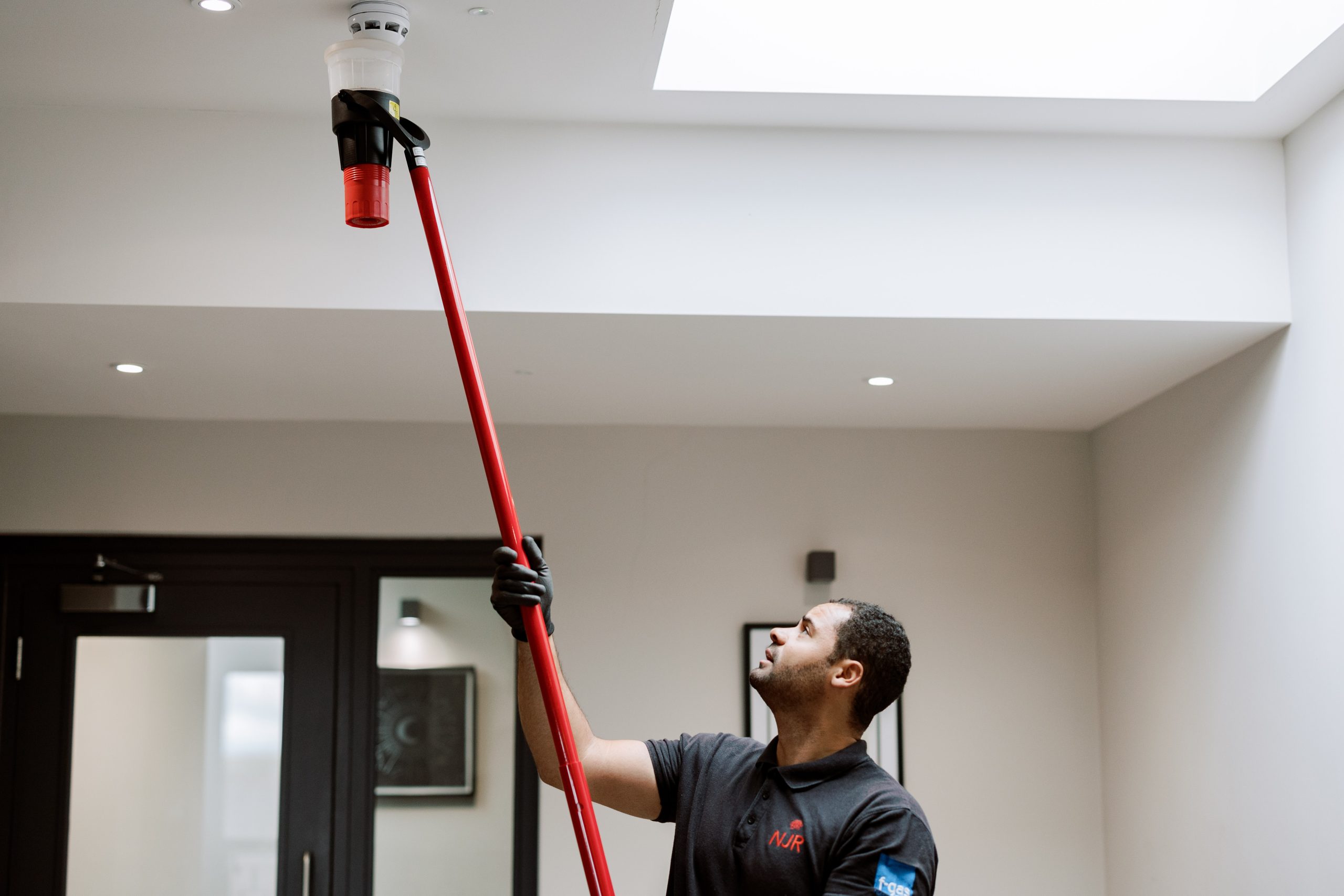
Smoke detectors are commonly used in areas where smoke is expected to provide an early indication of fire.
They can be suitable for many offices, corridors, communal areas and other locations, depending on the circumstances.
Heat Detectors
Heat detectors respond to a rise in temperature rather than smoke.
They can be appropriate in areas where smoke, steam, dust or fumes could result in unwanted alarms from smoke detection.
For example, certain kitchens or workshops may require a different approach to a standard office environment.
Multi-Sensor Detectors
Multi-sensor detectors combine different detection technologies within a single device.
Depending on the type of detector, this can allow the system to assess different fire characteristics and help reduce unwanted alarms in appropriate applications.
The choice of detector should always be based on the environment and the risks present.
What Are Manual Call Points?
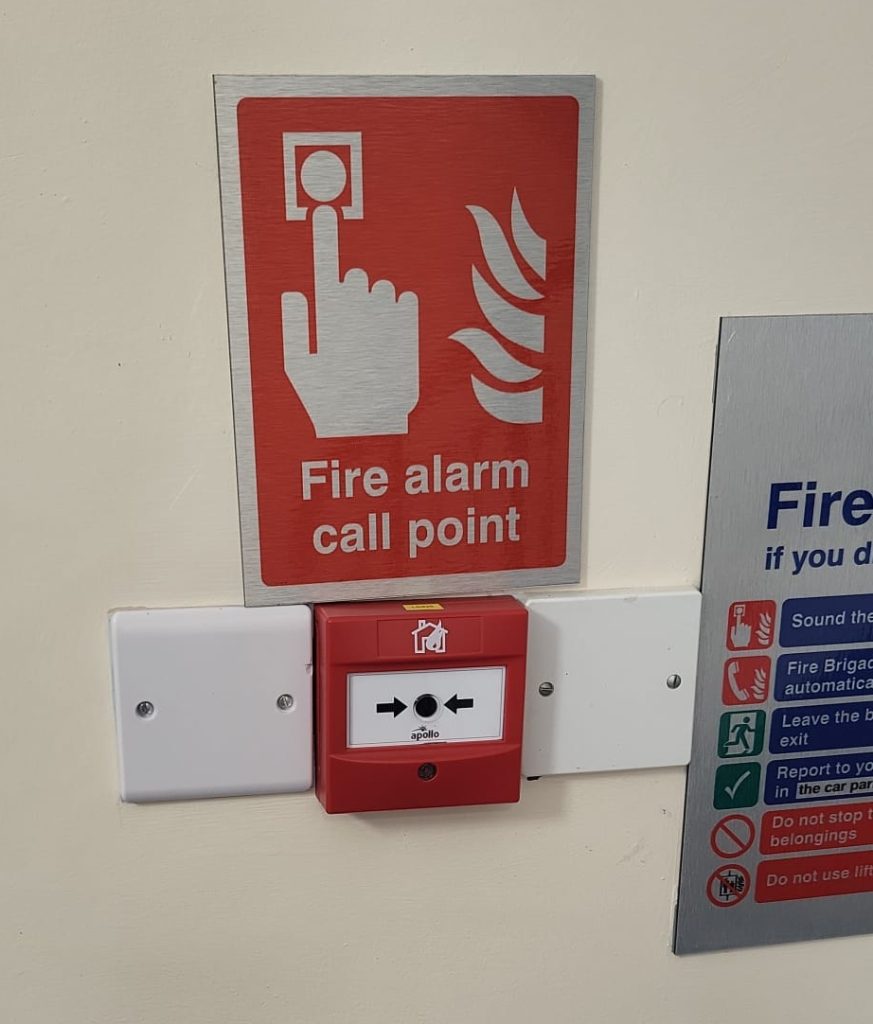
Manual call points, sometimes referred to as break-glass units, allow someone to manually activate the fire alarm system.
They are generally positioned along escape routes and at appropriate locations throughout a building.
Manual call points provide a way for a person who discovers a fire to raise the alarm without waiting for an automatic detector to activate.
What About Fire Alarm Sounders?
Detecting a fire is only part of the process.
People within the building need to be alerted so that they can respond appropriately.
Fire alarm systems can use devices such as:
- Sounders
- Visual alarm devices
- Combined sounder and visual alarm devices
- Voice alarm systems
The appropriate warning method will depend on the building, its occupants and the surrounding environment.
For example, visual alarm devices may be important in areas where an audible alarm may not be sufficient on its own.
How Is the Right Fire Alarm System Chosen?
There is no simple one-size-fits-all solution.
When designing a fire alarm system, the building and its use need to be considered as a whole.
Factors can include:
Building size and layout
A small office may have very different requirements from a large warehouse or multi-storey commercial building.
Occupancy
The number and type of people using the premises can affect the level of protection required.
Escape routes
Detection and alarm devices need to support the building’s evacuation arrangements.
Fire risks
Different activities and environments present different potential sources of fire.
Environmental conditions
Heat, dust, steam, fumes and other conditions can affect which detection technology is appropriate.
Existing fire safety measures
The fire alarm system should form part of the wider fire safety arrangements for the building.
What Is BS 5839?
BS 5839 is a series of British Standards covering fire detection and fire alarm systems.
For non-domestic premises, BS 5839-1 provides recommendations for the planning, design, installation, commissioning and servicing of fire detection and fire alarm systems.
Following the appropriate standard helps ensure that a system is designed and installed with the requirements of the particular premises in mind.
However, the correct specification should always be determined based on the individual building and its fire risk.
Does a Fire Alarm System Need Regular Servicing?
Installing a fire alarm system is only the beginning.
Regular inspection, testing and servicing are important to ensure the system continues to operate as intended.
A service can identify issues such as:
- Faulty detectors
- Damaged devices
- Battery problems
- Faults within the control panel
- Damaged cabling
- Obstructed or contaminated detectors
- Problems with sounders or visual indicators
- Other system faults
Regular maintenance can also help identify changes within a building that could affect the suitability of the existing system.
For example, changes to the layout, use or occupancy of a building may mean that the fire alarm system needs to be reviewed.
What About False Alarms?
Unwanted fire alarm activations can be disruptive for businesses and may lead to unnecessary evacuations.
However, the solution shouldn’t simply be to reduce the sensitivity of the system.
Repeated unwanted alarms can have a number of causes, including:
- Steam
- Dust
- Cooking fumes
- Aerosols
- Contaminated detectors
- Incorrect detector selection
- Environmental changes
- Faults within the system
Identifying the underlying cause is important so that the system can continue to provide appropriate fire detection while reducing unnecessary activations.
Can an Existing Fire Alarm System Be Upgraded?
In some cases, an existing system may be suitable for upgrading rather than completely replacing.
This will depend on the age, condition, design and compatibility of the existing equipment.
An electrical contractor or fire alarm specialist can assess the existing system and identify whether repairs, additional detection, replacement components or a complete upgrade would be appropriate.
If a building has undergone alterations or its use has changed, it is also worth reviewing whether the existing fire alarm arrangements remain suitable.
Fire Alarm Installation and Servicing in Huddersfield and West Yorkshire
NJR Electrical & Fire provides fire alarm installation, servicing, maintenance and associated electrical services for businesses and commercial premises.
Based in Kirkheaton, Huddersfield, we support customers across Huddersfield, Halifax, Dewsbury and surrounding areas.
Our services include:
- Fire alarm installation
- Fire alarm servicing and maintenance
- Fire alarm design
- Fire detection systems
- Conventional and addressable systems
- Emergency lighting
- Electrical inspection and testing
- Electrical remedial works
- AOV and smoke ventilation systems
- Electrical design and consultancy
Whether you’re installing a fire alarm system in a new building, upgrading an existing system or arranging ongoing servicing, we can help you assess your requirements.
Need advice about your fire alarm system? Contact NJR Electrical & Fire to discuss your premises and requirements.
Frequently Asked Questions
What type of fire alarm system does my business need?
The appropriate system depends on factors such as the size and layout of the premises, its use, occupancy, fire risks and evacuation arrangements. A fire risk assessment and appropriate system design should be used to determine the level of protection required.
What is the difference between conventional and addressable fire alarms?
A conventional system identifies the general zone where an alarm has been activated, while an addressable system can identify the individual device that has activated. Addressable systems can therefore provide more detailed information in larger or more complex premises.
How often should a commercial fire alarm be serviced?
The appropriate inspection and servicing arrangements depend on the type of system and premises. Fire alarm systems should be regularly inspected, tested and maintained in accordance with the relevant recommendations and the system manufacturer’s requirements.
Can I use the same type of fire detector throughout my building?
Not necessarily. Different environments may require different types of detection. For example, areas affected by steam, dust or fumes may require a different approach from a typical office environment.
Should my existing fire alarm system be upgraded?
It depends on the condition, age, design and suitability of the existing system, as well as any changes to the building or how it is used. A review can help determine whether repairs, additional detection or a replacement system is appropriate.